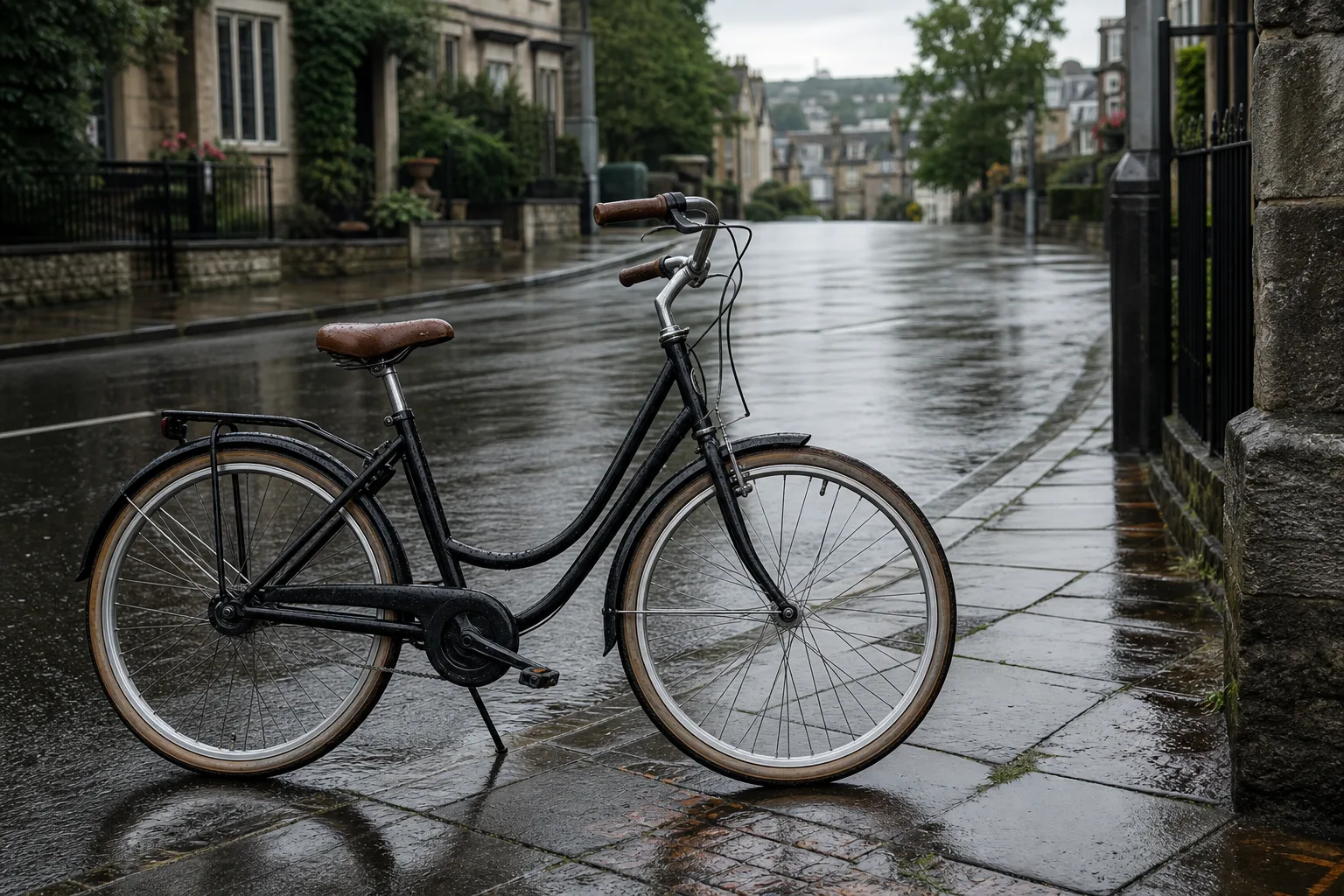
The bike shop demonstration always happens on level ground. A salesperson rolls the bike a few feet, back-pedals, the rear wheel locks, and the transaction feels settled. What that demonstration cannot show is the four-block rise between the grocery store and the house, or the painted crosswalk stripe that turns slick twenty minutes into a drizzle. Three drivetrain and braking arrangements dominate the upright, comfort-oriented category sold for short local errands, and they behave differently enough on a grade that the choice is worth an hour of attention before money changes hands.
One: the single-speed coaster, and what one braked wheel actually does
A coaster brake works by back-pedaling, which applies friction inside the rear hub shell, and its great virtue is that it lives entirely out of the weather. Nothing to adjust, nothing to freeze, no cable to stretch. The limit is arithmetic rather than quality: braking only the rear wheel means braking only the wheel that unloads under deceleration, so stopping distance from the same speed runs meaningfully longer than a bike with a front brake, and the gap widens on any downgrade. Many coaster bikes ship with a front caliper or rim brake for exactly this reason, and a careful reader checks whether the one in front of them does.
Two: three speeds inside the hub, sealed against the weather
An internally geared hub puts the gear train inside the same shell, driven by a single chainring and a straight, well-tensioned chain. Common three-speed hubs give a total spread somewhere near a factor of 1.8, meaning the low gear is roughly half again easier than the high one, which handles a mild residential rise but runs out of room on anything sustained. The compensations are real: gears change while stopped, which matters at a light on an incline, and the mechanism is untouched by road salt and grit. Many versions combine the internal gearing with a coaster brake, which again puts all stopping duty on one wheel unless a front brake is fitted.
Three: seven speeds hanging outside, and the range that buys
A derailleur setup exposes the cogs, chain and mechanism to everything the road throws, and pays for that with range. Seven cogs on a wide cassette give a spread that comfortably doubles the internal three-speed's, which is the difference between standing on the pedals for a block and simply spinning up it seated. Derailleur bikes almost always pair with rim or disc brakes at both wheels, so the front wheel does the majority of the stopping work, as physics prefers. The trade is shifting under load: the chain must be moving forward, which means planning the downshift before the grade rather than during it.
Four: rain, and the second or two that goes missing
Wet rims are the honest weakness of the caliper brake. Steel rims in particular lose a large share of their bite until the pads have wiped the water film away, which can take a full wheel revolution or more, and aluminum rims recover faster but still recover. A coaster brake does not care about rain at all, because the friction surfaces sit inside the hub. Disc brakes, increasingly common above roughly the $700 mark, are similarly indifferent. The Consumer Product Safety Commission is responsible for the federal requirements bicycles must meet before sale, including braking performance, and a shop should be able to say plainly which brake type is on the bike and what rim material it uses.
Five: what each one costs to keep
A coaster hub is the cheapest to own and the most annoying to service, because overhaul means opening the hub, a job many shops price as a flat labor charge rather than a quick adjustment. Internal hubs want an oil or grease service at long intervals, measured in years for casual mileage, plus an occasional shifter cable adjustment. Derailleur parts wear faster and cost less individually: chains, a cassette, a bent hanger after a tip-over, all of them stocked and quick. Over five years of errand riding, the totals land closer together than the sticker prices suggest, and the deciding factor is usually how much roadside fiddling a rider is willing to do.
The practical test is to find the steepest block on a regular route, ride the candidate bike up it and back down it, and notice both what the legs report and how far the bike travels after the brakes go on. Bring the route to the bike rather than the bike to the parking lot.